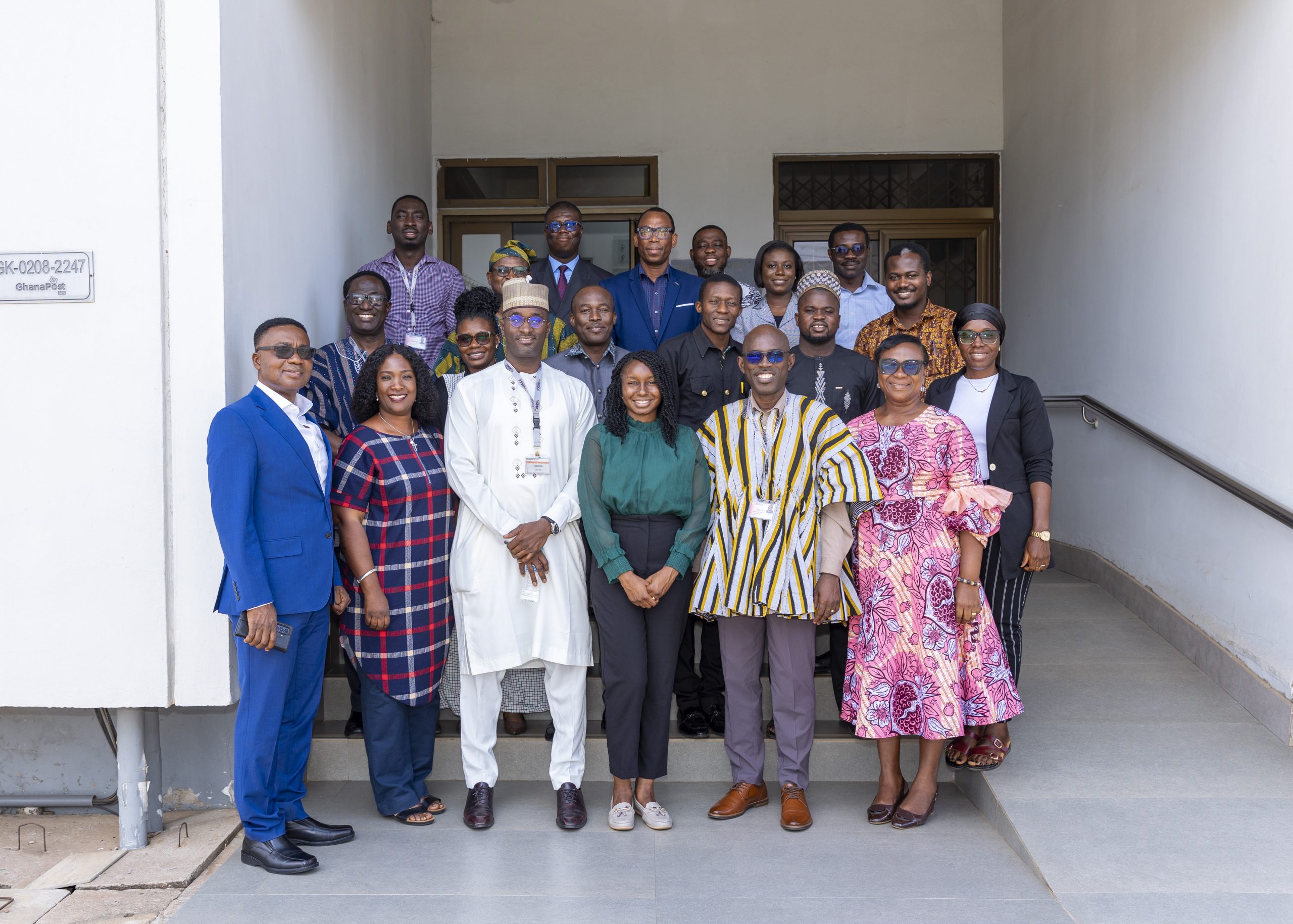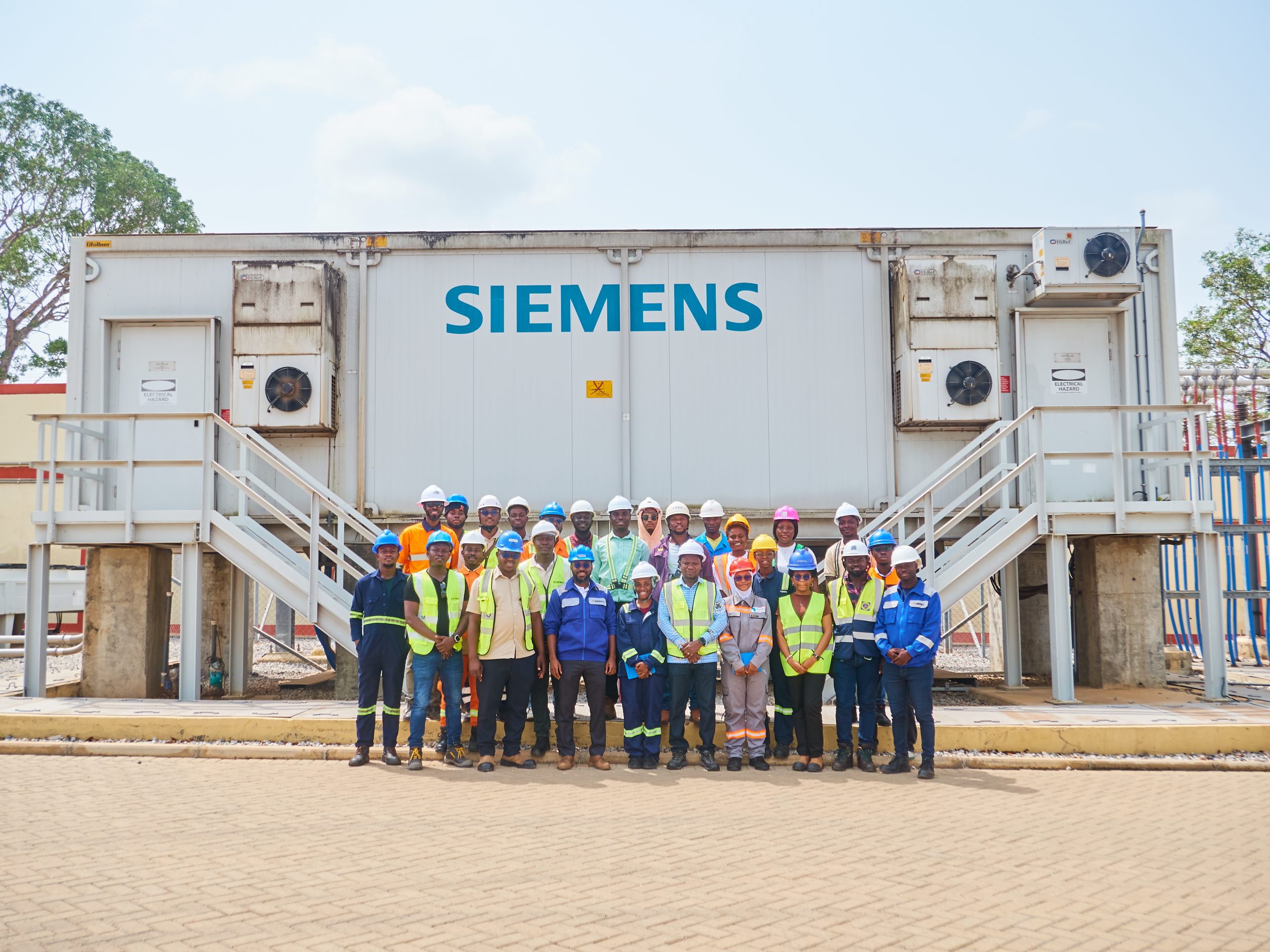
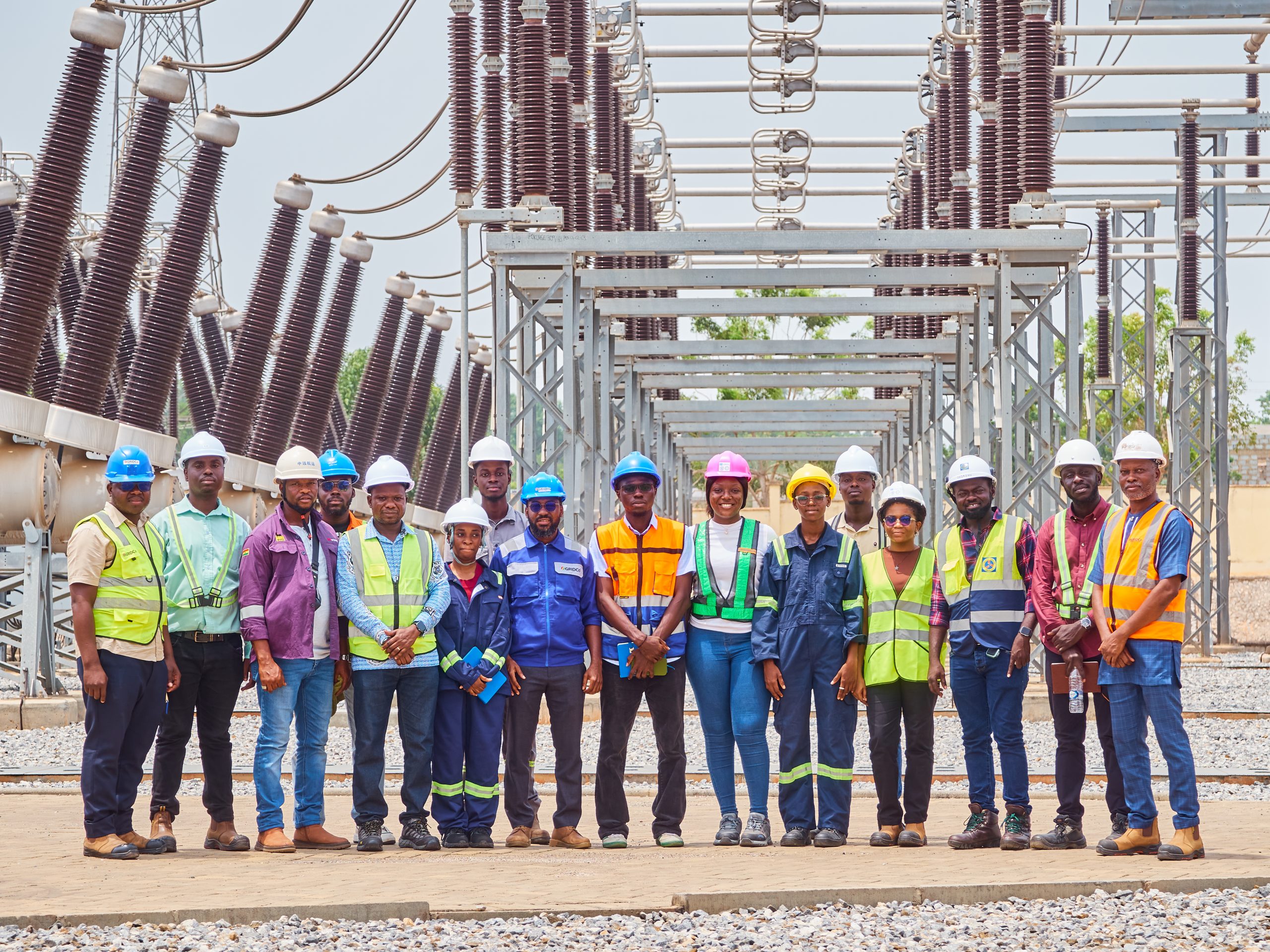
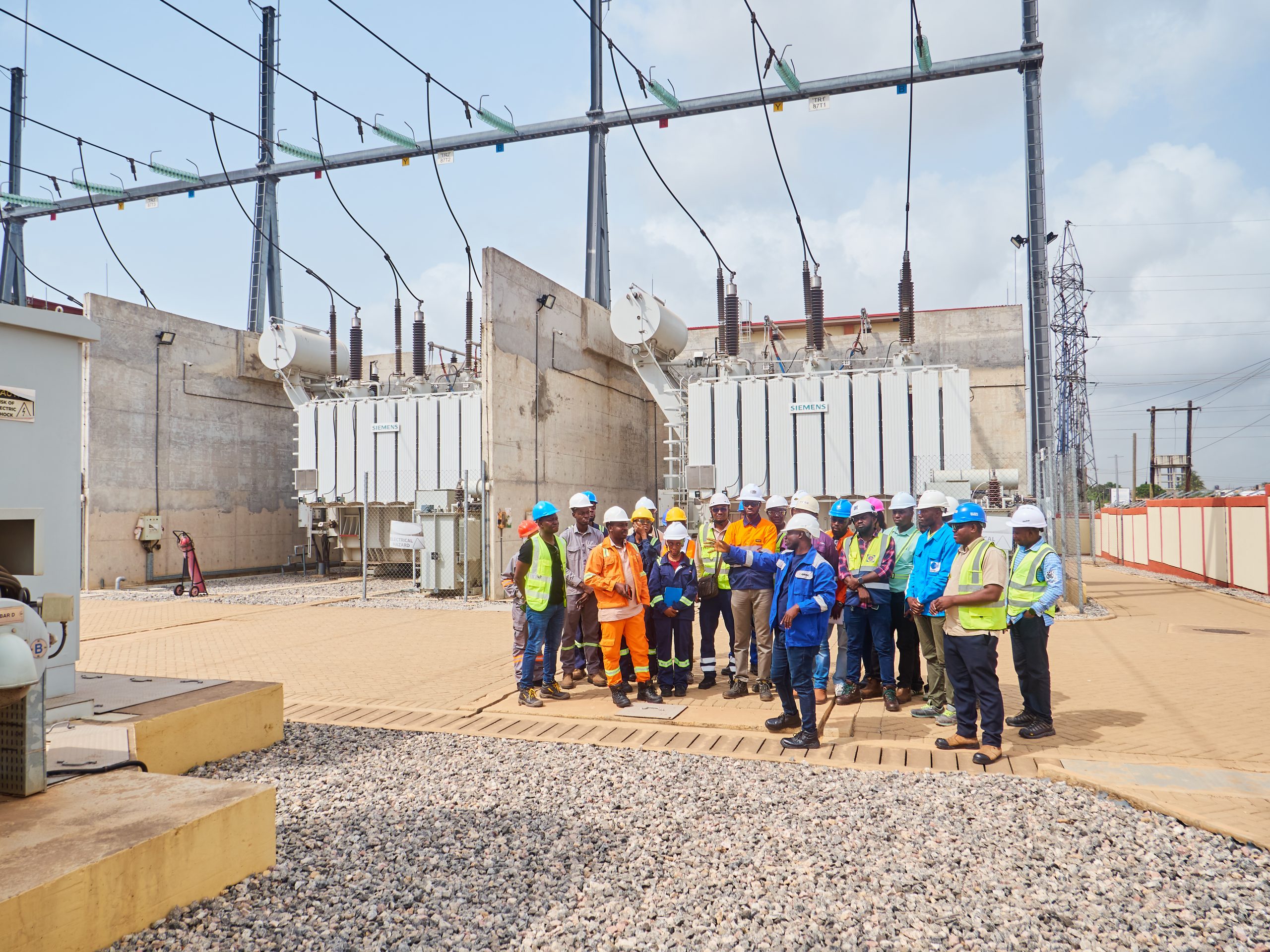
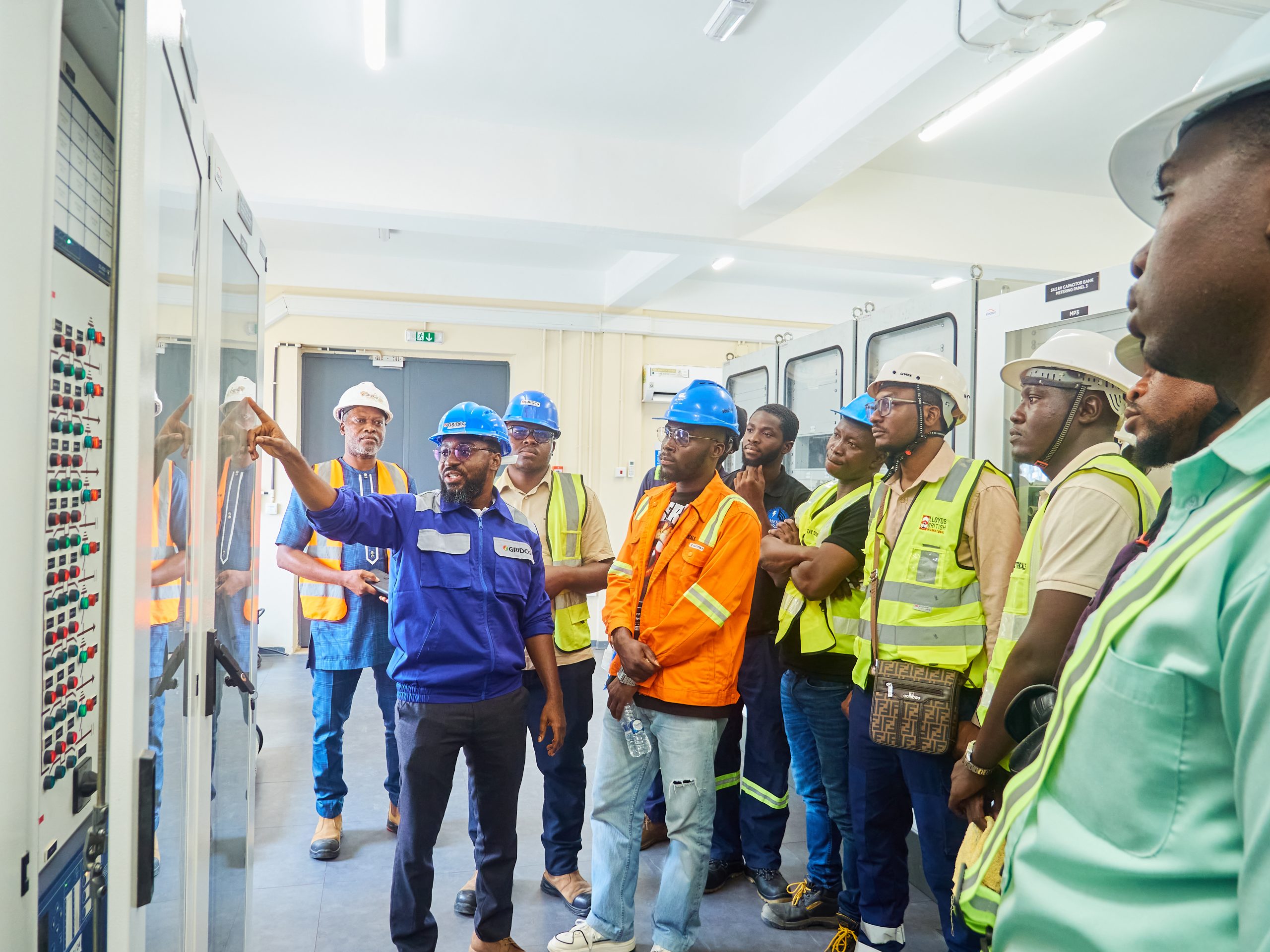
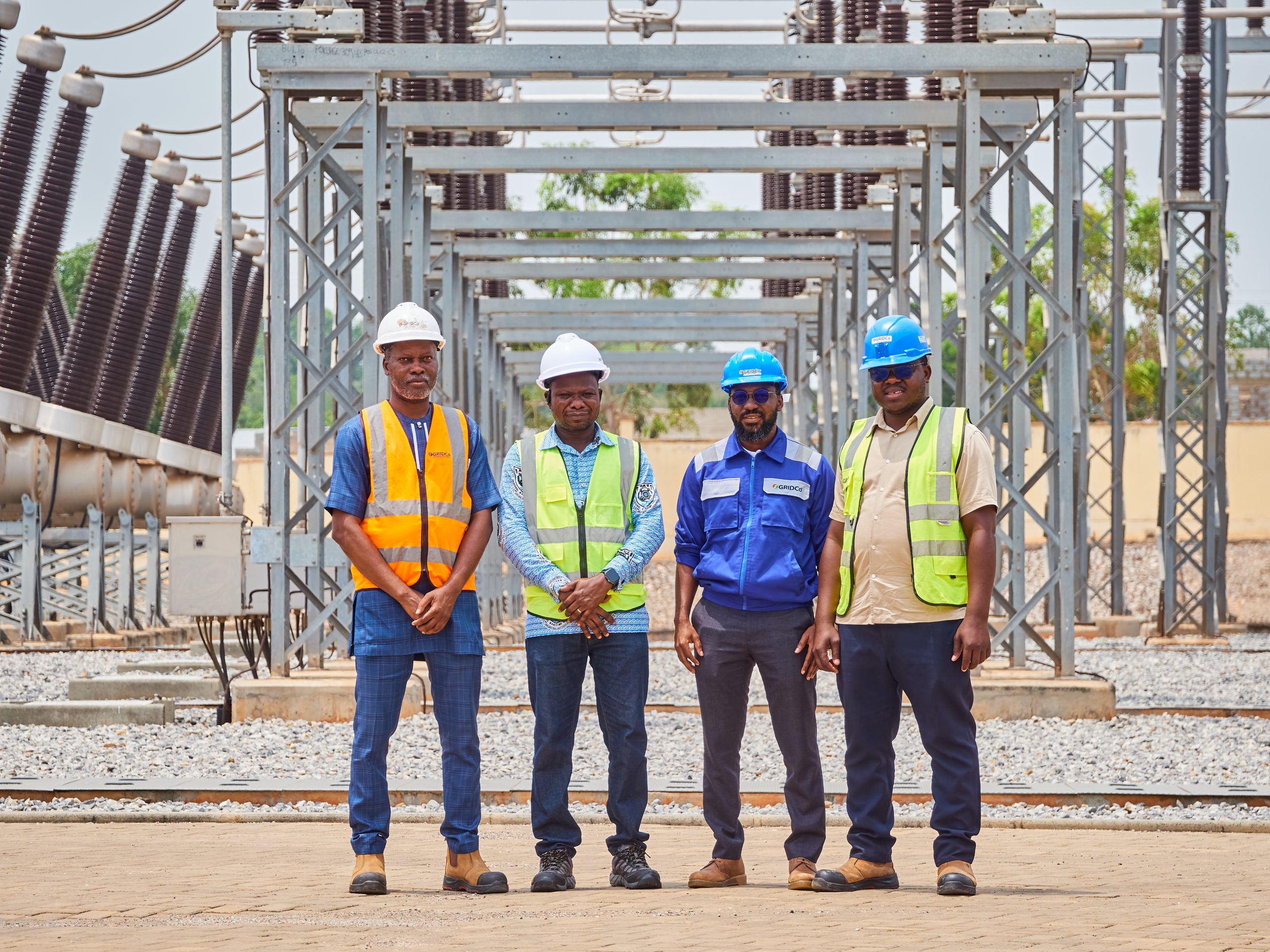
A group of Electrical Engineering students from the Regional Maritime University (RMU) recently undertook an educational visit to two (2) of GRIDCo’s key installations, namely; the Kasoa and Pokuase Bulk Supply Points (BSP) to gain practical insight into the operation of Ghana’s Power Transmission Network.
The visit was led by Ing. Ben Smith, Principal Technician Engineer, who guided the students through the operational role and technical configuration of the facilities within the National Interconnected Transmission System (NITS).
The engagement formed part of GRIDCo’s continued effort to support the industry–academia collaboration and provide young engineers with real-world exposure to Power System Operations.
The tour began at the Kasoa Bulk Supply Point (KBSP), one of the largest substations in Ghana’s transmission network. The facility plays a critical role in reinforcing power supply to the rapidly expanding Kasoa enclave and surrounding communities. Students were introduced to the substation’s core equipment and the operational principles behind maintaining stable power delivery to a growing load centre. Ing. Smith explained, “The substation plays a strategic role in enhancing system reliability and transmission efficiency across the Accra metropolis. It is the largest Gas Insulated Switchgear (GIS) substation in the network. The capacity of Kasoa substation is 435MVA with each of the three (3) transformers having a capacity of 145MVA. Accra Central is 375MVA capacity with each of the three (3) transformers having a capacity of 125MVA,” he noted.
The group later proceeded to the Pokuase Bulk Supply Point (PBSP) – a modern installation funded by the Millennium Development Authority (MiDA). Ing. Smith explained that the substation serves as an important one in strengthening transmission reliability and improving power transfer across the Accra metropolis.
During the technical briefing, students were introduced to the engineering concepts behind both Gas Insulated Switchgear (GIS) and Air Insulated Switchgear (AIS) systems. The GIS installations use gas-insulated equipment within compact, enclosed structures, making them suitable for urban environments, where space is limited. The AIS substations rely on air as the primary insulation medium and typically require larger outdoor installations.
Ing. Smith also walked the students through the practical realities of grid operations, from managing system constraints to maintaining reliability in a complex transmission environment. The presentation was supported by Daniel Kwabena Obeng, Supervising Technician Engineer; Ibrahim Abass, Assistant Engineer (Trainee); and Isaac Owusu, Maintenance Mechanic (Trainee), who assisted during the technical discussions and question-and-answer session.
Following the briefing, the students embarked on a guided tour of the installations, where they observed first-hand the operation of transformers, switchgear assemblies and control panels. The practical exposure enabled them to connect classroom theory with the realities of power system engineering and grid management.
The visit forms part of an ongoing collaboration between the RMU and GRIDCo, aimed at strengthening the link between engineering education and industry practice. RMU students have previously toured other GRIDCo facilities, including the System Control Centre (SCC) and the Volta Control Room in Tema, providing them with a broader perspective on the management of the NITS.
The visiting students expressed appreciation for the opportunity to experience power system infrastructure up close.
Here are some shared experiences:
“I am a Masters’ student in Renewable Energy Engineering. We were taken through the GIS at Kasoa and the AIS at Pokuase Substation. The visit has helped us understand how the transmission system operates. We are grateful to the Management and Staff of GRIDCo for giving us this opportunity,” said Truth Gadagoe.
Abena Serwaa Asare, a Level 400 student studying Marine Electrical and Electronic Engineering, added, “This visit helped us appreciate the difference between AIS and GIS systems, including their advantages and limitations. Experiences such as these are important for building a strong career in engineering.”
Stephanie Dalie, also a Level 400 student, noted that the visit provided a valuable learning experience beyond the classroom. “It was a practical experience of what our lecturers teach in class. Seeing the equipment and understanding how the substations operate has deepened our appreciation of power system engineering,” she said.